
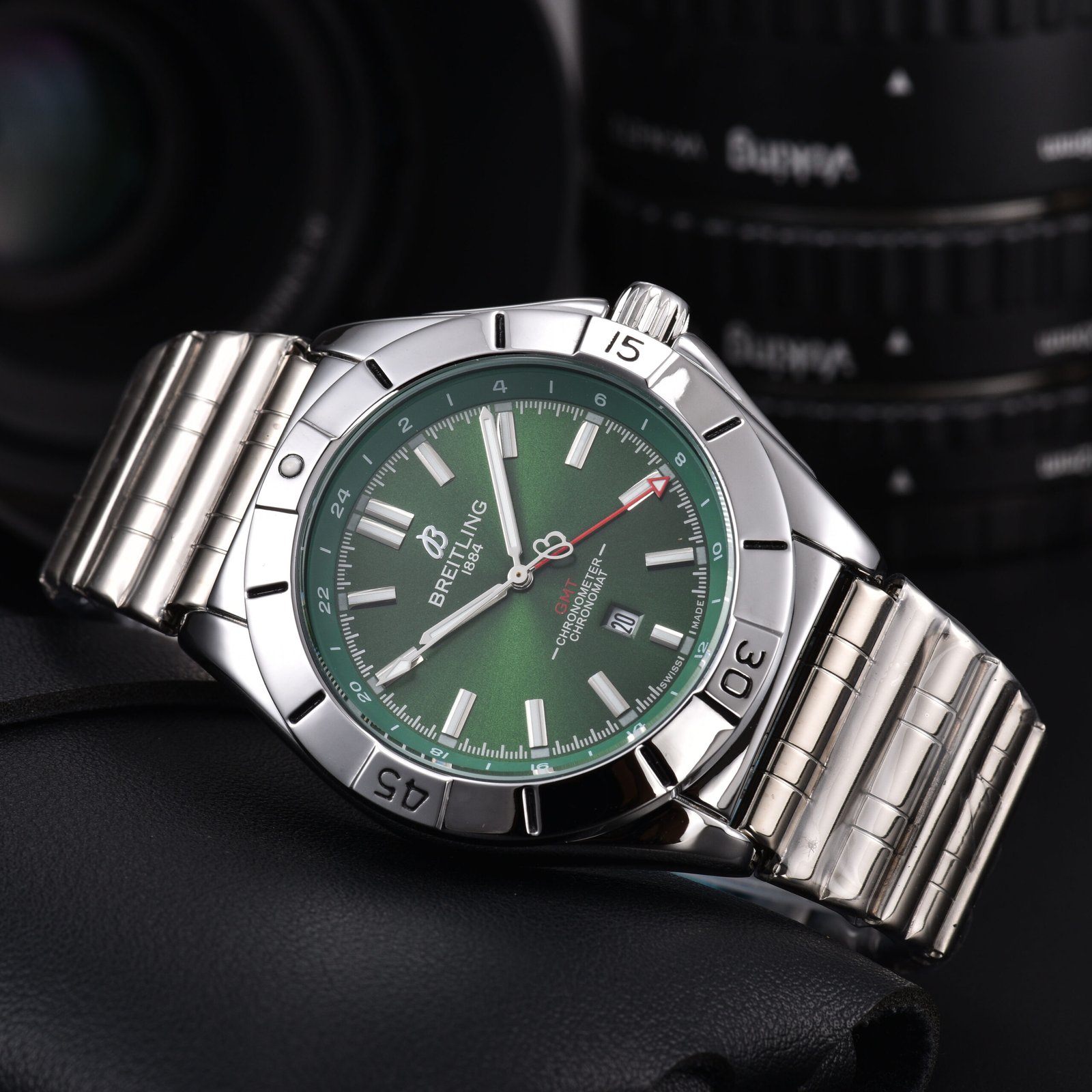
Luxury Watch Buying Guide 2026: 12 Expert Tips Before You Buy
Choosing a luxury watch is one of the most personal purchases you will ever make. A great watch can stay on your wrist for decades, mark the milestones of your life and become a family heirloom. Yet the sheer number of brands, movements, sizes and materials can make the decision feel overwhelming. This guide breaks the whole process into twelve clear steps so you can buy with confidence.
Quick answer: To choose the right luxury watch, decide your budget first, pick the style you will wear most (dress, diver, pilot or chronograph), choose a movement (automatic, manual or quartz), match the case size to your wrist (36–42mm suits most men, 26–36mm most women), and check materials such as sapphire crystal and 316L stainless steel. Finally, buy from a seller with clear return, shipping and support policies.

Key Takeaways
- Set your budget before choosing a luxury watch, including about 10% for straps and servicing.
- Pick the style you will wear most: dress, diver, pilot, chronograph or sports.
- Match case size and lug-to-lug length to your wrist; 38–41mm suits most men.
- Insist on sapphire crystal and check water resistance for your lifestyle.
- Buy from a seller with clear shipping, return and support policies.
Why a Luxury Watch Is Still Worth Buying in 2026
Phones tell the time, so why do people still spend real money on a luxury watch? The answer is that a fine watch was never only about telling the time. It is a piece of wearable engineering, a style statement and an object with emotional value. Watch fairs in 2026 have shown record interest in mechanical watches, slimmer cases and characterful dials.
A well-made watch also signals attention to detail. In business meetings, at weddings or on a night out, the watch on your wrist quietly tells people that you care about quality. Unlike most gadgets, it does not become obsolete after two years.
Finally, a watch is personal. Many buyers mark a promotion, graduation, marriage or the birth of a child with a new piece. That story stays attached to the watch every time you wear it.
Tip 1: Set a Realistic Budget First
Before you look at a single model, decide how much you are comfortable spending. Budget shapes everything else: the movement, the materials and the finishing. Setting it first stops you from falling in love with a watch you cannot afford.
Think about the total cost of ownership too. Mechanical watches need servicing every three to five years, and a spare strap or a watch box adds a little extra. A sensible plan is to keep about 10% of your budget aside for accessories and care.
| Budget range | What you typically get | Best for |
|---|---|---|
| Under $500 | Quality quartz or automatic movements, steel cases, mineral or sapphire glass | First watch, daily wear, style rotation |
| $500 – $2,000 | Better finishing, sapphire crystal, in-house style designs | Enthusiasts building a collection |
| $2,000 – $10,000 | Swiss or German manufacture movements, chronometer certification | Milestone purchases |
| $10,000+ | Haute horlogerie, precious metals, complications | Collectors and heirloom pieces |
If you are building a rotation of styles, our men’s watches and women’s watches collections let you explore different looks at accessible prices.
Tip 2: Decide Which Style You Will Actually Wear
The best luxury watch is the one you reach for every morning. Be honest about your lifestyle. A delicate dress watch looks wonderful but may sit in a drawer if you work outdoors. A chunky diver may feel out of place with a slim suit.
Here are the main styles, explained in detail in our guide to the types of watches:
- Dress watch: thin case, simple dial, leather strap, ideal for formal wear.
- Dive watch: rotating bezel, high water resistance, luminous hands, built for adventure.
- Pilot watch: large legible numerals, often a slide rule or GMT function.
- Chronograph: stopwatch sub-dials, sporty and versatile. Learn more in our chronograph watch guide.
- Field watch: rugged, simple and easy to read.
- Integrated-bracelet sports watch: the case flows into the bracelet, a very popular modern look.
If you want only one watch, a steel sports watch with a clean dial and 100m water resistance is the most versatile choice. It works with jeans, chinos and even a suit.
Tip 3: Understand the Movement
The movement, or calibre, is the engine of a watch. It is the single biggest factor in how a luxury watch feels and how much it costs. There are three main types.
Automatic (self-winding) movement
An automatic movement winds itself through the motion of your wrist. A weighted rotor spins and tightens the mainspring. Most modern automatics run for 38 to 80 hours when taken off. Enthusiasts love the smooth sweep of the seconds hand and the craft inside.
Manual (hand-wound) movement
A manual movement must be wound by turning the crown, usually once a day. Many people enjoy this daily ritual. Hand-wound watches are often thinner because there is no rotor.
Quartz movement
Quartz watches use a battery and a vibrating quartz crystal. They are extremely accurate, low maintenance and usually more affordable. A quartz watch is a practical choice if you want “grab and go” reliability.
For a detailed comparison, read our guide on automatic vs quartz watch movements.
Tip 4: Get the Case Size Right
Case size makes or breaks how a watch looks on you. A watch that is too large overwhelms the wrist; one that is too small can look lost. In 2026 the trend has moved firmly toward smaller and slimmer cases, with 36–41mm becoming the sweet spot for most men.
| Wrist circumference | Suggested men’s case size | Suggested women’s case size |
|---|---|---|
| Under 6 in (15 cm) | 34–38mm | 24–30mm |
| 6–7 in (15–18 cm) | 38–41mm | 28–34mm |
| 7–8 in (18–20 cm) | 40–44mm | 32–38mm |
| Over 8 in (20 cm) | 42–46mm | 36–40mm |
Diameter is not the only number that matters. Lug-to-lug length (the distance between the tips of the lugs) should not exceed the width of your wrist. Thickness matters too: under 12mm slides easily under a shirt cuff. Our full watch size guide shows you how to measure at home.
Tip 5: Check the Case Material
The case protects the movement and defines the look. Common luxury watch materials include:
- 316L stainless steel: durable, corrosion resistant and easy to polish.
- 904L steel: a more corrosion-resistant steel alloy used by some high-end brands.
- Titanium: about 40% lighter than steel and hypoallergenic.
- Ceramic: extremely scratch resistant and colourfast, though it can crack if dropped hard.
- Gold (yellow, white, rose): heavy, warm and prestigious.
- Bronze: develops a unique patina over time.
For everyday wear, steel and titanium give the best balance of strength, comfort and price.
Tip 6: Insist on a Quality Crystal
The crystal is the clear cover over the dial. It takes most of the knocks a watch receives, so it is worth paying attention to. Sapphire crystal is the gold standard because it scores 9 on the Mohs hardness scale, second only to diamond. Mineral glass is cheaper and less scratch resistant, while acrylic is soft but easy to polish.
We compare all three in our guide to sapphire crystal vs mineral glass.
Tip 7: Know Your Water Resistance Needs
Water resistance ratings confuse many buyers. A watch marked 30m is not safe for swimming; it is only protected against splashes and rain. For swimming choose at least 100m, and for diving choose a watch certified to ISO 6425.
Read our detailed guide to watch water resistance before you take any watch into the pool or sea.
Tip 8: Choose the Right Strap or Bracelet
A strap changes the personality of a watch instantly. A steel bracelet is durable and sporty. Leather is classic and formal. Rubber is perfect for heat, sport and water. Fabric NATO straps are casual and affordable.
Check the lug width, usually 18mm, 20mm or 22mm, so you can buy extra straps later. Our watch strap guide explains every option.
Tip 9: Decide Which Complications You Really Need
In watchmaking, a complication is any function beyond hours, minutes and seconds. Popular complications include:
- Date and day-date: practical for daily life.
- Chronograph: a built-in stopwatch.
- GMT: tracks a second time zone, ideal for travellers. See our GMT watch guide.
- Moonphase: shows the phase of the moon, a romantic and elegant detail.
- Power reserve indicator: shows how much energy is left in the mainspring.
More complications mean more parts, a thicker case and a higher service cost. Choose only what you will use.
Tip 10: Look at Finishing and Details
Two watches can look similar in photos and feel very different in the hand. Look for crisp, well-applied indices, evenly printed text, smooth bezel action and a crown that screws down cleanly. Brushed and polished surfaces should meet in sharp lines.
Luminous paint on the hands and markers should be applied evenly. A display caseback is a bonus if you enjoy seeing the movement at work.
Tip 11: Buy From a Seller You Can Trust
Where you buy a luxury watch matters as much as what you buy. Before you pay, check that the seller offers:
- Clear product photos and honest descriptions of materials and movement.
- A written shipping policy and order tracking.
- Secure checkout and well-known payment methods.
- A fair return and exchange policy.
- Responsive customer support you can contact easily.
At Luxury Watch Markets we ship worldwide, package every order securely and publish our terms and conditions so you know exactly what to expect.
Tip 12: Plan for Care and Long-Term Ownership
A luxury watch rewards good care. Wipe it with a soft microfibre cloth, keep it away from strong magnets and avoid hot showers and saunas. Service mechanical watches every three to five years so the oils stay fresh and the gaskets remain water tight.
Store watches in a padded box away from direct sunlight. Our watch care guide gives you a full maintenance routine.
Swiss, Japanese or German: Does the Origin of a Luxury Watch Matter?
Where a watch is made still influences its character. Each major watchmaking region has its own strengths, and knowing them helps you read product descriptions with a sharper eye.
Swiss watchmaking
Switzerland is the historic heart of fine watchmaking. The Vallée de Joux and Geneva have produced watches for centuries, and “Swiss Made” is a legally protected label. Under Swiss law, at least 60% of the manufacturing cost must be generated in Switzerland and the movement must be cased and finally inspected there. Swiss watches are known for refined finishing, complications and heritage designs.
Japanese watchmaking
Japan offers some of the best value in the industry. Japanese makers pioneered the quartz wristwatch in 1969 and today produce outstanding automatic movements, beautiful textured dials and remarkable accuracy for the price. If you want serious quality without a heritage premium, Japanese craftsmanship is hard to beat.
German watchmaking
The town of Glashütte in Saxony is Germany’s watchmaking capital. German watches are often minimalist, highly legible and engineered with precision. Bauhaus-inspired dress watches and robust pilot watches are a German speciality.
The truth is that great watches come from all three regions. Focus first on build quality, movement and comfort, then let origin guide your final choice.
Luxury Watch Glossary for Beginners
A few terms appear on almost every product page. Knowing them makes shopping much easier:
- Bezel: the ring around the crystal; it can be fixed or rotating.
- Crown: the knob used to set the time and wind the watch.
- Lugs: the arms that attach the strap to the case.
- Indices: the hour markers on the dial.
- Lume: luminous paint that glows in the dark.
- Power reserve: how long a mechanical watch runs when fully wound.
- Caseback: the rear cover, solid or transparent.
For more than fifty definitions, see our complete watch terminology glossary.
Common Mistakes When Buying Your First Luxury Watch
Even experienced buyers make these mistakes. Avoid them and you will be far happier with your purchase:
- Buying too big: oversized cases looked trendy a decade ago but feel dated and uncomfortable now.
- Ignoring comfort: always consider weight, thickness and the clasp.
- Chasing hype only: buy what you love, not only what social media says is popular.
- Forgetting lifestyle: a gold dress watch is not ideal for the gym.
- Skipping the policies: always read shipping, return and warranty terms before ordering.
How to Build a Small Watch Collection Over Time
Many people start with one watch and slowly build a “three-watch collection.” A popular formula is:
- A steel sports watch for daily wear and travel.
- A dress watch on leather for weddings, meetings and formal events.
- A fun watch such as a colourful chronograph, a diver on rubber or a skeleton dial.
This approach covers every occasion without spending a fortune on one piece. Explore our latest new arrivals for fresh ideas to add to your rotation.
Luxury Watch Buying Checklist
Use this short checklist before you click “buy”:
- Budget decided, including straps and servicing.
- Style matches your daily life.
- Movement type chosen (automatic, manual or quartz).
- Case size and thickness suit your wrist.
- Crystal is sapphire or high-quality mineral.
- Water resistance suits your activities.
- Strap or bracelet is comfortable and easy to swap.
- Seller has clear shipping, returns and support.
Frequently Asked Questions
What is the best luxury watch for a first-time buyer?
A steel automatic sports watch between 38mm and 41mm with sapphire crystal and 100m water resistance is the safest first choice. It suits work, weekends and travel, and it is easy to dress up or down.
Is an automatic or quartz luxury watch better?
Automatic watches offer craftsmanship and a smooth sweeping seconds hand, while quartz watches are more accurate and need less maintenance. Choose automatic for passion and tradition, quartz for convenience.
What size luxury watch should a man wear?
Most men look best with a case between 38mm and 42mm. Measure your wrist: under 7 inches suits 38–40mm, while 7–8 inches suits 40–44mm. Keep the lug-to-lug length within the width of your wrist.
How often should a luxury watch be serviced?
Mechanical luxury watches should usually be serviced every three to five years. Quartz watches need a battery change every two to three years and a full service less often.
Can I swim with a luxury watch?
Only if it is rated at least 100m water resistant and the crown is fully pushed in or screwed down. Watches rated 30m or 50m should not be used for swimming.
How do I know a watch seller is trustworthy?
Look for clear photos and descriptions, published shipping and return policies, secure payment, order tracking and an easy way to contact customer support.
Final Thoughts: Choose a Watch That Tells Your Story
The right luxury watch balances budget, style, comfort and quality. Start with how you live, choose a movement you enjoy, match the size to your wrist and buy from a seller who is open about their policies. Do that, and your new watch will feel right every time you put it on.
Remember that there is no single “correct” luxury watch. A collector in Geneva and a first-time buyer in Lahore or London may love completely different pieces, and both are right. Take your time, try different styles on your wrist where you can, read the specifications carefully and trust your instinct. The watch that makes you smile when you glance at it is the right one.
Ready to find yours? Browse the full luxury watches collection at Luxury Watch Markets and discover a piece that fits your style and budget.