
15 Types of Watches Every Man and Woman Should Know (2026 Guide)
Walk into any watch shop and you will see dozens of designs that look completely different from each other. Some are slim and elegant, some are chunky and covered in numbers, and some show their gears through the dial. Each of these designs belongs to a family with its own history and purpose. Understanding the main types of watches makes it far easier to choose the right one for your lifestyle.
Quick answer: The main types of watches are dress, dive, pilot, field, chronograph, GMT, racing, integrated-bracelet sports, skeleton, moonphase, tank or square, digital, smartwatch, fashion and jewellery watches. They are grouped by purpose (diving, flying, formal wear), by function (chronograph, GMT) and by design (skeleton, square). Most people need only two or three types to cover every occasion.

Key Takeaways
- There are 15 main types of watches, grouped by purpose, function and design.
- Dress, dive, pilot, field and chronograph watches are the core styles.
- A steel sports watch is the most versatile single choice.
- Two or three types of watches cover almost every occasion.
- Many modern watches combine ideas, such as a dive watch with a GMT hand.
How Are Types of Watches Classified?
Watches can be grouped in three main ways, and one watch often belongs to more than one group:
- By movement: automatic, manual-wind, quartz, solar or smart. Our automatic vs quartz watch guide covers these in detail.
- By purpose: tools designed for a job, such as diving, flying, racing or the military.
- By design or complication: how the watch looks or what extra functions it has, such as a skeleton dial or a moonphase.
In this guide we focus on the purpose and design families, because they shape how a watch looks and when you can wear it.
1. Dress Watch
The dress watch is the most elegant of all the types of watches. It was designed to be worn with a suit or formal attire and to slip discreetly under a shirt cuff.
Key features:
- Thin case, usually under 10mm.
- Simple dial with hours and minutes, sometimes small seconds.
- Precious metal or polished steel case.
- Leather strap, often black or brown.
- Modest size, typically 36–40mm for men.
When to wear it: weddings, business meetings, formal dinners and black-tie events. A dress watch says refinement without shouting.
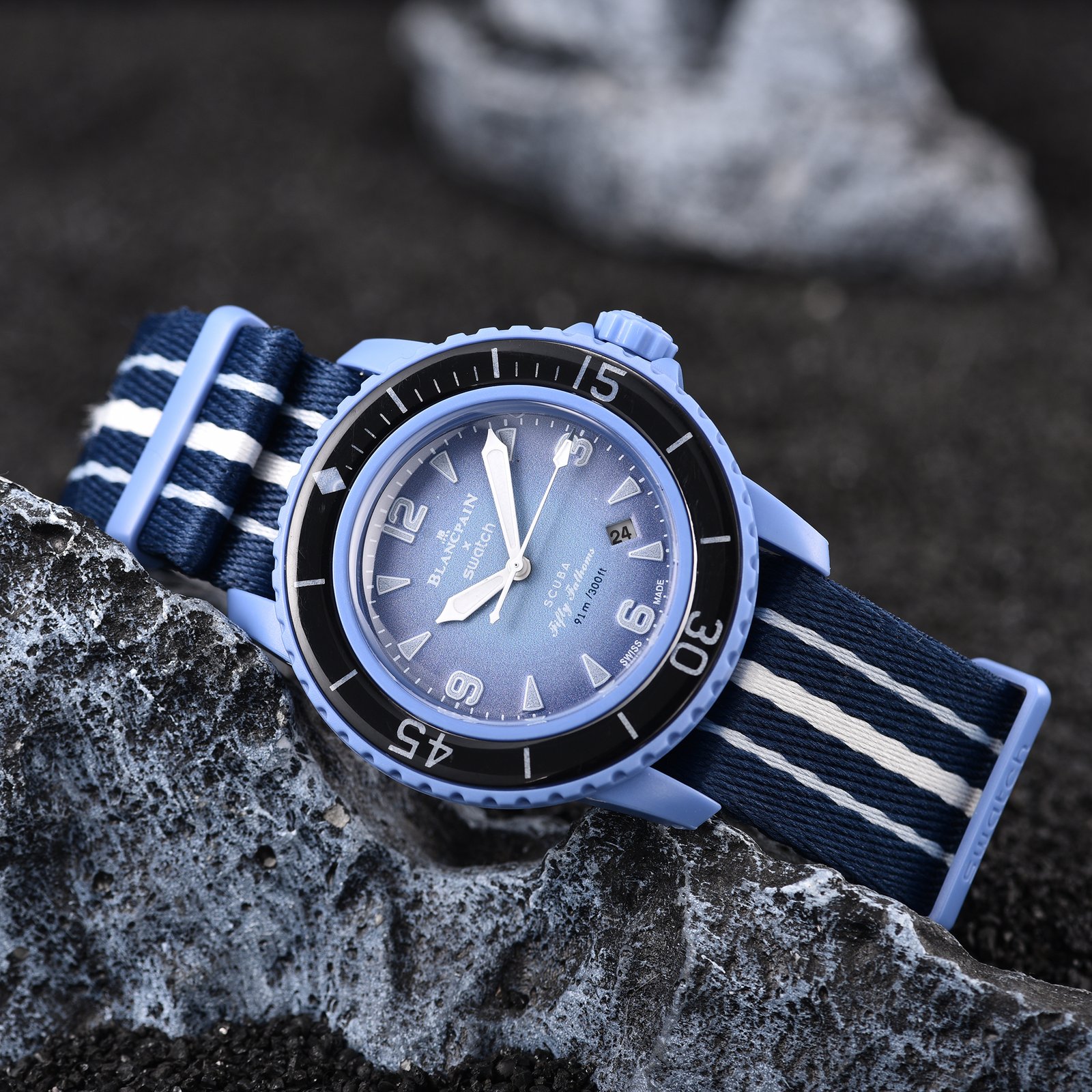
2. Dive Watch
Dive watches were created for professional and recreational divers who needed a reliable way to track time underwater. Today they are among the most popular types of watches in the world because they are tough, legible and versatile.
Key features:
- Water resistance of at least 100m, often 200–300m.
- Unidirectional rotating bezel to track dive time.
- Bright luminous hands and markers.
- Screw-down crown.
- Steel bracelet or rubber strap.
Genuine divers’ watches are certified under the ISO 6425 standard, which you can read about in our watch water resistance guide. Learn more about the history of the diving watch on Wikipedia.
When to wear it: almost anywhere, from the beach to the office. A diver on a steel bracelet is one of the best “one watch” choices.
3. Pilot Watch (Aviator Watch)
Pilot watches were born in the early days of aviation, when pilots needed large, readable instruments in noisy, vibrating cockpits. Some pilot watches include a slide rule bezel for flight calculations.
Key features:
- Large case, often 40–46mm.
- Big Arabic numerals and high-contrast dial.
- Oversized crown that can be used with gloves.
- Leather strap, often with rivets.
- Sometimes a slide rule bezel or GMT hand.
When to wear it: casual and smart-casual outfits. Pilot watches look great with jackets, denim and boots.
4. Field Watch
The field watch has military roots. Soldiers needed simple, rugged and easy-to-read watches in the field, so the design focuses on function.
Key features:
- Simple, highly legible dial with clear numerals.
- Matte case finish to avoid reflections.
- Durable canvas, nylon or leather strap.
- Modest size of 36–40mm.
When to wear it: outdoors, weekends, travel and casual everyday wear. Field watches are affordable, practical and charming.
5. Chronograph Watch
A chronograph is a watch with a built-in stopwatch. Pushers on the side of the case start, stop and reset the timer, and sub-dials record elapsed minutes and hours. Many chronographs also have a tachymeter scale for measuring speed.
Key features:
- Two pushers beside the crown.
- Two or three sub-dials.
- Central chronograph seconds hand.
- Sporty, technical appearance.
Read our full chronograph watch guide to learn how to use one.
When to wear it: casual and smart-casual wear, sports events and driving. A chronograph adds energy to any outfit.
6. GMT and World Time Watch
GMT watches track two time zones at once using an extra 24-hour hand and a 24-hour bezel. World time watches go further, showing all 24 major time zones on a rotating city ring.
Key features:
- Extra 24-hour hand, often in a contrasting colour.
- Two-colour 24-hour bezel (day and night).
- Popular with travellers and international business people.
Learn exactly how they work in our GMT watch guide.
7. Racing Watch
Racing watches are inspired by motorsport. They usually combine a chronograph with a tachymeter and bold colours inspired by racing liveries.
Key features:
- Chronograph function and tachymeter bezel.
- Bright accents such as red, yellow or green.
- Rubber or perforated leather “rally” straps.
- Often linked to Formula 1 and endurance racing.
When to wear it: weekends, car events and casual outings. A racing watch is fun, bold and full of personality.
8. Integrated-Bracelet Sports Watch
This style became famous in the 1970s, when designers began to make the bracelet flow seamlessly from the case. Today it is one of the most desired types of watches in the luxury world.
Key features:
- Bracelet built into the case shape.
- Often an octagonal or cushion-shaped bezel.
- Mix of brushed and polished surfaces.
- Thin, elegant profile despite being a sports watch.
Discover the story behind these designs in our article on iconic watches.
When to wear it: almost any occasion. It sits perfectly between a dress watch and a sports watch.
9. Skeleton Watch
A skeleton watch has a dial and movement that are cut away to reveal the inner workings. You can see the gears, springs and balance wheel moving in real time.
Key features:
- Open or transparent dial.
- Visible mechanical movement.
- Often decorated bridges and plates.
- Strong visual impact.
When to wear it: evenings, events and any time you want a conversation piece.
10. Moonphase Watch
A moonphase watch shows the current phase of the moon through a small window on the dial. A disc painted with one or two moons rotates once every lunar month, about 29.5 days.
Key features:
- Small aperture showing a moon disc.
- Often combined with a calendar.
- Elegant, romantic design.
When to wear it: formal and smart occasions. A moonphase adds poetry to a classic dress watch.
11. Tank or Square Watch
Rectangular and square watches break away from the round case. One of the earliest famous rectangular designs appeared in 1917 and was inspired by the shape of military tanks.
Key features:
- Rectangular, square or cushion case.
- Often Roman numerals and a slim profile.
- Leather strap or bracelet.
When to wear it: formal and fashion-forward outfits. Shaped watches look distinctive and timeless.
12. Digital Watch
Digital watches display the time with numbers on an LCD or LED screen. They became hugely popular in the 1970s and 1980s and remain loved for their durability and features.
Key features:
- Numeric display.
- Functions such as alarms, stopwatch, backlight and world time.
- Lightweight resin or metal cases.
When to wear it: sports, outdoor activities and casual wear.
13. Smartwatch
Smartwatches connect to your phone and offer notifications, fitness tracking, payments and apps.
Key features:
- Touchscreen display.
- Health and fitness sensors.
- Needs regular charging.
When to wear it: workouts and daily convenience. Many people wear a smartwatch for the gym and a traditional watch for everything else.
14. Fashion Watch
Fashion watches are designed mainly for style and trends. They are often produced by fashion houses and focus on colours, shapes and branding.
Key features:
- Trend-driven designs and colours.
- Usually quartz movements.
- Accessible prices.
When to wear it: whenever you want a quick style update to match an outfit.
15. Jewellery Watch
Jewellery watches blur the line between timepiece and fine jewellery. They often feature gemstones, crystals, mother-of-pearl dials and bangle-style bracelets.
Key features:
- Gem-set bezels or dials.
- Precious metal finishes such as rose or yellow gold.
- Small, elegant cases.
When to wear it: evenings, celebrations and special events. Explore our women’s watches for elegant options.
A Brief History: How the Different Types of Watches Were Born
Most of the types of watches we know today were invented to solve real problems. Understanding that history makes each style more meaningful when you wear it.
From pocket to wrist
Until the early twentieth century, most men carried pocket watches. Wristwatches were considered jewellery for women. That changed during the First World War, when soldiers needed to read the time quickly without reaching into a pocket. Wristwatches with protective grilles and luminous dials became essential equipment, and the field watch was born.
Aviation and the pilot watch
As aviation grew in the 1910s and 1920s, pilots demanded large dials, oversized crowns and accurate timekeeping for navigation. Even earlier, in 1904, an aviation pioneer famously asked his jeweller friend for a watch he could read without letting go of the controls, which led to one of the first purpose-built wristwatches for flight.
The ocean and the dive watch
Water resistance improved dramatically in the 1920s with sealed cases and screw-down crowns. In the 1950s, recreational scuba diving took off, and watchmakers created rotating bezels so divers could track their remaining air time. The modern dive watch has barely changed since then.
Speed and the chronograph
Chronographs began as tools for timing horse races, artillery and scientific experiments. In the 1960s, motor racing and the space race made them icons, and they remain among the most loved types of watches today.
Quartz and the digital age
The arrival of quartz in 1969 and digital displays in the 1970s brought accurate timekeeping to everyone. Digital watches became symbols of the future, and decades later the smartwatch continued that story.
Which Types of Watches Hold Their Appeal Longest?
Some styles never go out of fashion. Classic dress watches, steel divers, chronographs and field watches have been worn for generations because their designs are rooted in function. Trend-led fashion watches change quickly, which makes them fun but less timeless. If you want a watch you can wear for twenty years, choose a design with a clear purpose and clean proportions.
Types of Watches Compared at a Glance
| Watch type | Main purpose | Typical size (men) | Best occasion |
|---|---|---|---|
| Dress | Formal elegance | 36–40mm | Weddings, meetings |
| Dive | Underwater timing | 40–44mm | Everyday, beach |
| Pilot | Legibility in flight | 40–46mm | Casual, travel |
| Field | Rugged simplicity | 36–40mm | Outdoors, weekends |
| Chronograph | Stopwatch timing | 40–44mm | Smart-casual, sport |
| GMT | Two time zones | 39–42mm | Travel, business |
| Integrated sports | Versatile luxury | 38–42mm | Almost everything |
| Skeleton | Show the movement | 40–44mm | Evenings, events |
How Many Types of Watches Do You Really Need?
You do not need all fifteen. Most people can cover every occasion with two or three types of watches:
- An everyday sports watch such as a diver or integrated-bracelet piece.
- A dress watch for formal events.
- A personality piece such as a chronograph, GMT or skeleton watch.
If you want only one watch, choose a versatile steel sports watch around 38–41mm. Our watch size guide helps you find the right fit.
How to Choose Between the Different Types of Watches
Ask yourself these questions:
- What will I wear most often? Match the watch to your usual clothing.
- Will I swim or play sports? Choose a diver or sports watch with good water resistance.
- Do I travel often? A GMT watch is extremely practical.
- Do I attend formal events? Add a slim dress watch.
- Do I love mechanics? A skeleton or display caseback watch will delight you.
For a complete step-by-step process, read our luxury watch buying guide.
Matching Types of Watches to Your Wardrobe
A watch works best when it matches the rest of your outfit. As a simple rule, the more formal the clothes, the simpler and slimmer the watch should be. A dress watch belongs with a suit, while a chunky diver feels right with a polo shirt and chinos. Chronographs and pilot watches sit happily in the middle, ideal with a blazer and jeans.
Metal colour matters too. Match a gold case to gold cufflinks, belt buckles or jewellery, and pair steel with silver tones. Leather straps look best when they roughly match your shoes and belt. For more practical rules, see our guide on how to wear a watch.
Watch Styles Trending in 2026
The watch world never stands still. In 2026, several trends are shaping new releases across nearly all types of watches:
- Smaller cases: 36–40mm sizes are back in fashion for both men and women.
- Thin profiles: brands are competing to make slimmer cases that wear comfortably.
- Bold dial colours: green, burgundy, salmon and icy blue are everywhere.
- Textured dials: sunburst, guilloché and stone-like finishes add depth.
- Integrated bracelets: the 1970s-inspired look remains hugely popular.
- Skeleton and open-worked designs: showing the movement is a key trend.
Frequently Asked Questions
What are the main types of watches?
The main types of watches include dress, dive, pilot, field, chronograph, GMT, racing, integrated-bracelet sports, skeleton, moonphase, square or tank, digital, smartwatch, fashion and jewellery watches.
Which type of watch is best for everyday wear?
A stainless steel dive watch or integrated-bracelet sports watch is best for everyday wear. It is durable, water resistant and smart enough for the office.
What is the difference between a dress watch and a sports watch?
A dress watch is thin, simple and usually worn on leather with formal clothes. A sports watch is thicker, more robust, more water resistant and often worn on a steel bracelet or rubber strap.
What type of watch should I buy first?
Most people should start with a versatile steel sports watch around 38–41mm with 100m water resistance. It works for almost every occasion.
Are smartwatches replacing traditional watches?
No. Smartwatches are popular for fitness and convenience, but traditional watches remain highly desired for craftsmanship, style and longevity. Many people own both.
Which types of watches are best for travel?
GMT and world time watches are the best types of watches for travel because they show home time and local time together. A durable sports watch with good water resistance is also a smart travel companion.
Which types of watches are best as gifts?
Dress watches, chronographs and versatile steel sports watches make excellent gifts because they suit many tastes and occasions. A moonphase or skeleton watch is a memorable choice for special milestones.
Conclusion
Learning the different types of watches helps you shop with purpose. Each style was designed for a reason, whether that is diving, flying, racing or looking sharp at a formal event. Choose the style that fits your life, then refine your choice by size, movement and materials.
Whatever you choose, remember that the different types of watches are not rigid categories. Many modern watches mix ideas, such as a dive watch with a GMT hand or a dress watch with a moonphase. That creativity is part of what makes watches so exciting to explore.
Ready to explore? Browse our men’s watches, women’s watches and full luxury watches collection to find the type of watch that suits you best.