
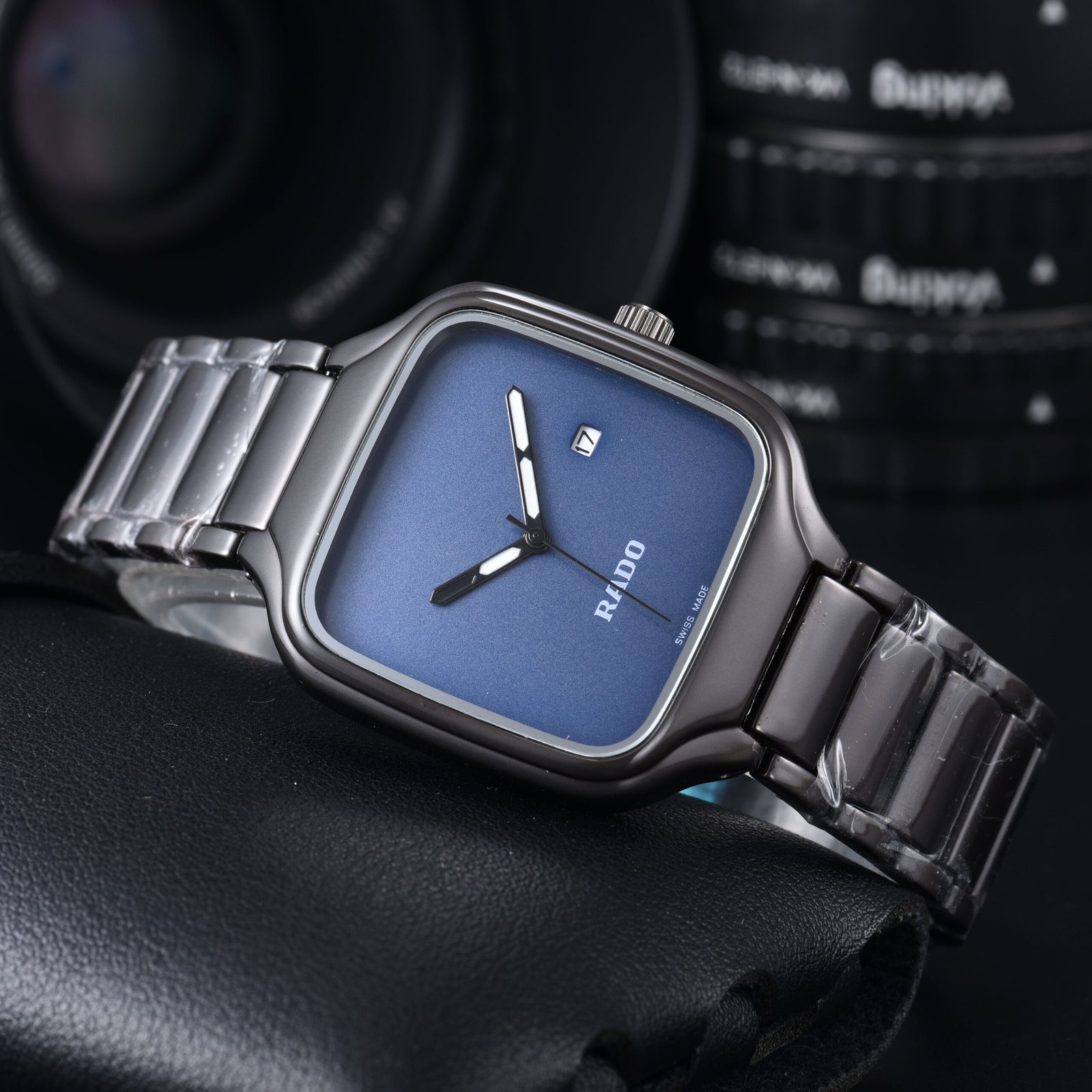
Sapphire Crystal vs Mineral Glass vs Acrylic: Which Watch Crystal Is Best?
The crystal is the transparent window that protects your watch dial. It takes almost every knock and scrape your watch receives, from door frames to desk edges, yet it is one of the most overlooked specifications when people shop. The type of crystal affects how your watch looks, how well it resists scratches and how much it costs. This guide compares the three main options so you know exactly what you are buying.
Quick answer: Sapphire crystal is the most scratch-resistant watch crystal, rated 9 on the Mohs hardness scale, and is the standard on quality luxury watches. Mineral glass (around 5–6 on the Mohs scale) is cheaper and more shatter resistant but scratches more easily. Acrylic (around 2–3) scratches easily but rarely shatters and can be polished at home. For everyday wear, sapphire crystal offers the best long-term clarity.

Key Takeaways
- Sapphire crystal scores 9 on the Mohs scale and resists almost all everyday scratches.
- Mineral glass is cheaper and tougher against impacts but scratches more easily.
- Acrylic scratches easily but rarely shatters and can be polished at home.
- Anti-reflective coating improves sapphire crystal clarity in bright light.
- For a daily watch, sapphire crystal offers the best long-term value.
What Is a Watch Crystal?
In watchmaking, the “crystal” is the clear cover that sits on top of the dial, sometimes called the glass or the lens. Despite the name, not every watch crystal is made of crystal. The three most common materials are synthetic sapphire, mineral glass and acrylic plastic.
The crystal does more than protect the dial. Its shape, thickness and coating influence how the watch reflects light, how easy it is to read and even how tall the case looks. A domed crystal creates a vintage feel, while a flat crystal looks clean and modern.
What Is Sapphire Crystal?
Sapphire crystal is not cut from natural gemstones. It is synthetic sapphire, a form of aluminium oxide (corundum) grown in laboratories at temperatures above 2,000°C. The resulting boules are sliced, ground and polished into thin watch crystals with diamond tools.
Sapphire scores 9 on the Mohs hardness scale, making it harder than almost any material you will encounter in daily life. Only diamond (10) and a handful of rare materials are harder. In practical terms, steel keys, coins, sand and most stone surfaces cannot scratch it. You can learn more about the mineral itself on the sapphire page on Wikipedia.
Advantages of sapphire crystal
- Exceptional scratch resistance: stays clear for years of daily wear.
- Superb clarity: very high transparency when combined with anti-reflective coating.
- Premium feel: the standard on most quality watches.
- Long-term value: a scratch-free crystal keeps the watch looking new.
Disadvantages of sapphire crystal
- Brittleness: although very hard, sapphire can crack or shatter under a sharp, heavy impact.
- Reflections: without anti-reflective coating it can be quite reflective.
- Higher cost: it is more expensive to manufacture and replace.
What Is Mineral Glass?
Mineral glass is ordinary glass, made mainly from silica, that has been strengthened through heat treatment or chemical tempering. It is the same basic family of material as the glass in windows, but processed to be tougher.
Mineral glass rates around 5 to 6 on the Mohs scale. It resists light scuffs better than acrylic but can be scratched by harder materials such as sand, stone and some metals.
Advantages of mineral glass
- Affordable: keeps the watch price down.
- Good shatter resistance: more flexible than sapphire, so it handles impacts better.
- Clear and glass-like: looks similar to sapphire at first glance.
Disadvantages of mineral glass
- Scratches more easily: deep scratches are hard to remove.
- Cannot be polished at home: scratches usually mean replacing the crystal.
What Is Acrylic Crystal?
Acrylic, also known as Plexiglas or Hesalite, is a type of plastic. It was the standard crystal material on most watches for much of the twentieth century and is still used on vintage-inspired designs today.
Acrylic scores only about 2 to 3 on the Mohs scale, so it scratches easily. However, it has two big strengths: it rarely shatters, and light scratches can be polished away in minutes with a special paste.
Advantages of acrylic crystal
- Very shatter resistant: flexes under impact rather than breaking. That is why some watches used for spaceflight relied on it.
- Easy to polish: light scratches disappear with polishing paste.
- Warm vintage look: domed acrylic creates beautiful distortion at the edges.
- Lightweight and inexpensive.
Disadvantages of acrylic crystal
- Scratches very easily.
- Can look cloudy if neglected.
- Less premium feel compared to sapphire.
Sapphire Crystal vs Mineral Glass vs Acrylic: Comparison Table
| Feature | Sapphire crystal | Mineral glass | Acrylic |
|---|---|---|---|
| Mohs hardness | 9 | 5–6 | 2–3 |
| Scratch resistance | Excellent | Moderate | Low |
| Shatter resistance | Moderate | Good | Excellent |
| Clarity | Excellent (with AR coating) | Good | Good, warmer look |
| Can be polished at home | No | No | Yes |
| Cost | Highest | Medium | Lowest |
| Typical use | Luxury and quality watches | Fashion and mid-range watches | Vintage-style and tool watches |
The 6 Key Differences Explained
1. Scratch resistance
This is where sapphire crystal dominates. Everyday hazards such as keys, zips, desks and walls leave mineral glass and acrylic marked over time, while sapphire stays clear. If you wear one watch every day, this alone makes sapphire worthwhile.
2. Impact resistance
Hardness and toughness are not the same thing. Sapphire is very hard but relatively brittle. Mineral glass bends slightly more, and acrylic bends a lot. In a sharp, heavy impact, acrylic is least likely to break and sapphire is most likely to crack, although thick sapphire crystals are very strong in normal use.
3. Clarity and reflections
High-quality sapphire crystal is exceptionally transparent, but its high refractive index can make it reflective in bright light. That is why premium watches use anti-reflective coatings. Mineral glass reflects less on its own, while acrylic has a soft, warm glow.
4. Repair and replacement
Acrylic can be polished at home. Mineral glass and sapphire cannot; a scratched mineral crystal is usually replaced, while a sapphire crystal rarely needs replacing unless it cracks.
5. Cost
Sapphire costs more to produce because it requires high-temperature growth and diamond cutting. As production methods have improved, sapphire has become far more affordable and now appears on many mid-priced watches.
6. Aesthetic character
Each material looks slightly different. Sapphire is crisp and modern, mineral glass is clean and neutral, and domed acrylic offers vintage charm with distortion around the edges that many enthusiasts adore.
Understanding Anti-Reflective (AR) Coating
Anti-reflective coatings reduce glare so you can read the dial in bright sunlight. They are applied in very thin layers that cancel out reflected light.
- Single-sided (inside) AR: applied to the underside of the crystal. It cannot be scratched but reduces glare less.
- Double-sided AR: applied to both sides for maximum clarity. The outer layer can wear or scratch over time, sometimes leaving visible marks.
Some AR coatings give the crystal a faint blue or purple tint when viewed at an angle. This is normal and a sign of the coating at work.
Crystal Shapes: Flat, Domed and Box
The shape of the crystal changes how a watch looks and feels:
- Flat crystal: clean, modern and easy to keep reflection-free.
- Domed crystal: curved for a vintage look; it can distort the dial edges at an angle.
- Box crystal: tall with vertical sides, often seen on retro chronographs and dive watches.
- Cyclops lens: a small magnifying bubble over the date window.
A Short History of Watch Crystals
For centuries, pocket watches were protected by natural glass that was thick, heavy and easily shattered. When wristwatches became popular in the early twentieth century, that fragility became a real problem. Soldiers, pilots and sportsmen needed something tougher.
The acrylic era
From the 1930s onward, acrylic plastic offered a solution. It was light, cheap and almost unbreakable, and it became the standard on most watches for decades. Many of the most famous tool watches of the 1950s and 1960s, including watches that travelled into space, used acrylic.
The arrival of synthetic sapphire
Synthetic sapphire was first produced in 1902 using a flame-fusion method developed by French chemist Auguste Verneuil. However, cutting and polishing such a hard material into thin, clear watch crystals was difficult and expensive. Sapphire began appearing on luxury watches in the 1960s and became widespread in the 1980s and 1990s as manufacturing improved.
Today
Sapphire crystal is now standard on most quality watches, and even many affordable models use it. Acrylic remains popular for vintage reissues, while mineral glass continues to serve fashion and entry-level watches.
Hardened and Coated Mineral Glass
Between basic mineral glass and full sapphire, several manufacturers offer improved alternatives:
- Hardened mineral glass: heat- or chemically-treated glass with better scratch and impact resistance than standard mineral.
- Sapphire-coated mineral glass: a thin sapphire-like layer applied to mineral glass. It improves scratch resistance at the surface but can wear through over time.
- Proprietary hybrid crystals: some brands use their own names for strengthened glass that sits between mineral and sapphire in performance.
These options can be excellent value, but always read the specifications carefully. “Sapphire-coated” is not the same as solid sapphire crystal.
Sapphire Beyond the Crystal: Casebacks and Cases
Sapphire is not only used on the front of a watch. Many mechanical watches feature a sapphire display caseback so you can admire the movement. Because the back faces your wrist, scratch resistance there matters too.
A few ultra-luxury watches even use full sapphire cases, carved from solid blocks of synthetic sapphire. These cases are completely transparent and showcase the movement from every angle. They require days of machining and remain among the most technically impressive watches made today.
Replacing a Watch Crystal: What to Expect
If your crystal is badly scratched or cracked, a watchmaker can replace it. The process typically involves:
- Removing the bezel or pressing out the old crystal.
- Fitting a new crystal of the correct diameter, thickness and shape.
- Replacing the crystal gasket.
- Pressure testing the watch to confirm water resistance.
Acrylic replacements are usually quick and inexpensive. Mineral glass replacements are moderately priced. Sapphire replacements cost more, especially for domed shapes or crystals with AR coating, but they are rarely needed because sapphire so seldom scratches.
Crystal Choices at Different Price Levels
| Price level | Most common crystal |
|---|---|
| Entry-level and fashion | Mineral glass |
| Mid-range | Hardened mineral or sapphire crystal |
| Luxury | Sapphire crystal with AR coating |
| Vintage-inspired reissues | Acrylic or domed sapphire |
How to Tell Which Crystal Your Watch Has
If the specifications are not available, try these simple tests:
- Water drop test: place a small drop of water on a clean crystal. On sapphire, it usually beads up tightly; on mineral glass it spreads out more.
- Tap test: tap gently with a fingernail. Acrylic sounds dull and plastic-like, while sapphire and mineral glass sound sharper.
- Temperature test: sapphire often feels cooler to the touch than acrylic.
- Reflection test: look at the crystal at an angle; a faint coloured tint suggests AR coating, common on sapphire.
- Check the caseback or paperwork: many watches are marked “sapphire” on the case or listed as such on the product page.
These are only indicators. A watchmaker can confirm the material with certainty.
Which Crystal Is Best for Your Lifestyle?
Your daily routine is the best guide to choosing a crystal:
- Office and city life: sapphire crystal keeps the watch spotless despite desks, laptops and door handles.
- Manual work and outdoor adventures: a thick sapphire or a tough acrylic crystal handles rough use; mineral glass scratches quickly in these conditions.
- Sports and active hobbies: sapphire for scratch resistance, or acrylic if impacts are frequent.
- Formal events and occasional wear: any crystal works, but sapphire keeps a dress watch looking pristine.
- Vintage lovers: domed acrylic or domed sapphire captures retro charm.
If you are unsure, sapphire is the safest all-round choice. It is the crystal most likely to keep your watch looking new for the longest time with the least effort.
Is Sapphire Crystal Worth It?
For most buyers, yes. If you wear your watch daily, a sapphire crystal will look as clear in ten years as it does today. It protects the dial, keeps the watch looking new and adds to the overall quality impression.
Mineral glass is a sensible choice for fashion watches or pieces you wear occasionally. Acrylic makes sense if you love vintage aesthetics or want a crystal that will not shatter in extreme conditions.
Want to understand all the other specifications that matter? Our luxury watch buying guide covers movements, materials and more.
How to Care for Your Watch Crystal
- Clean it with a soft microfibre cloth to remove fingerprints and dust.
- Avoid abrasive cloths, toothpaste and household cleaners.
- Do not knock sapphire crystals against hard stone or tile surfaces.
- Polish acrylic crystals with a dedicated plastic polishing paste.
- If a crystal cracks, stop wearing the watch and have it replaced immediately to keep dust and moisture out.
For more care advice, read our full watch care guide. The crystal also plays a key role in keeping water out, so see our watch water resistance guide as well.
Frequently Asked Questions
Is sapphire crystal scratch proof?
Sapphire crystal is extremely scratch resistant but not completely scratch proof. Only diamond and a few very hard materials, such as some ceramics, can scratch it.
Can sapphire crystal break?
Yes. Sapphire is very hard but relatively brittle, so a sharp, heavy impact against a hard surface can crack or shatter it.
Is mineral glass good for a watch?
Mineral glass is a decent, affordable option with good shatter resistance. It scratches more easily than sapphire, so it suits fashion watches or occasional wear.
Why do some luxury watches use acrylic crystal?
Acrylic is very shatter resistant, lightweight and easy to polish. Some brands use it for vintage authenticity or for watches designed to survive extreme conditions.
How can I tell if my watch has sapphire crystal?
Try the water drop test, where water beads tightly on sapphire, or check the product specifications and caseback. A watchmaker can confirm it with certainty.
Does sapphire crystal make a watch more expensive?
Slightly, because it is more costly to produce. However, sapphire is now common even on mid-priced watches, and it saves money long term by staying clear.
What is Hesalite crystal?
Hesalite is a brand name for a type of acrylic crystal. It is lightweight, highly shatter resistant and easy to polish, which is why it has been used on some famous tool and space-flight watches.
Conclusion
When you compare watches online, the crystal is easy to skip over, but it is one of the specifications you will notice every single day. A clear, unscratched crystal makes the dial pop and keeps the whole watch looking cared for.
The crystal is a small part with a big impact on how your watch looks and ages. Sapphire crystal offers the best scratch resistance and clarity, mineral glass gives good value and toughness, and acrylic provides vintage charm and shatter resistance. Choose based on how you wear your watch, and it will keep your dial looking beautiful for years.
Ready to choose your next watch? Browse our luxury watches, men’s watches and women’s watches and always check the crystal in the specifications before you buy. If you have any questions about a particular model, our friendly team is always happy to help you decide.