
Watch Strap Guide: Every Type of Strap and Bracelet Explained (2026)
Changing a watch strap is the fastest, cheapest way to give your watch a completely new personality. The same watch can look formal on black leather, rugged on canvas, sporty on rubber and relaxed on a fabric NATO. Yet many people wear their watch on the strap it came with for years without realising how much more it could do. This guide explains every type of watch strap, how to measure for one and how to change it yourself.
Quick answer: The main watch strap types are leather, metal bracelet, rubber, silicone, NATO, Zulu, canvas, mesh (Milanese) and sailcloth. Choose leather for formal wear, a metal bracelet for versatility, rubber for sport and water, and NATO or canvas for casual style. Always match the strap width to your watch’s lug width, usually 18mm, 20mm or 22mm, measured between the lugs in millimetres.

Key Takeaways
- Always match a new watch strap to your watch’s lug width.
- Leather suits formal wear; rubber and steel suit water and sport.
- NATO and canvas straps are affordable ways to change your style.
- A spring bar tool lets you change a watch strap in minutes.
- Replace leather straps every 1–3 years depending on wear.
Why Your Watch Strap Matters
The strap is the part of your watch that touches your skin all day. It determines comfort, affects how the watch sits on your wrist and plays a huge role in style. A great watch on the wrong strap can look awkward, while an ordinary watch on the perfect strap can look exceptional.
The right watch strap also protects your investment. A leather strap is not ideal for swimming, and a heavy steel bracelet is not ideal for a slim dress watch. Matching the strap to the activity keeps your watch safe and comfortable.
Strap vs Bracelet vs Band: What Is the Difference?
These terms are often used interchangeably, but there are small differences:
- Strap: usually made of leather, rubber, fabric or synthetic materials.
- Bracelet: made of metal links, such as stainless steel, titanium or gold.
- Band: a general term common in North America that covers both.
10 Types of Watch Strap Explained
1. Leather watch strap
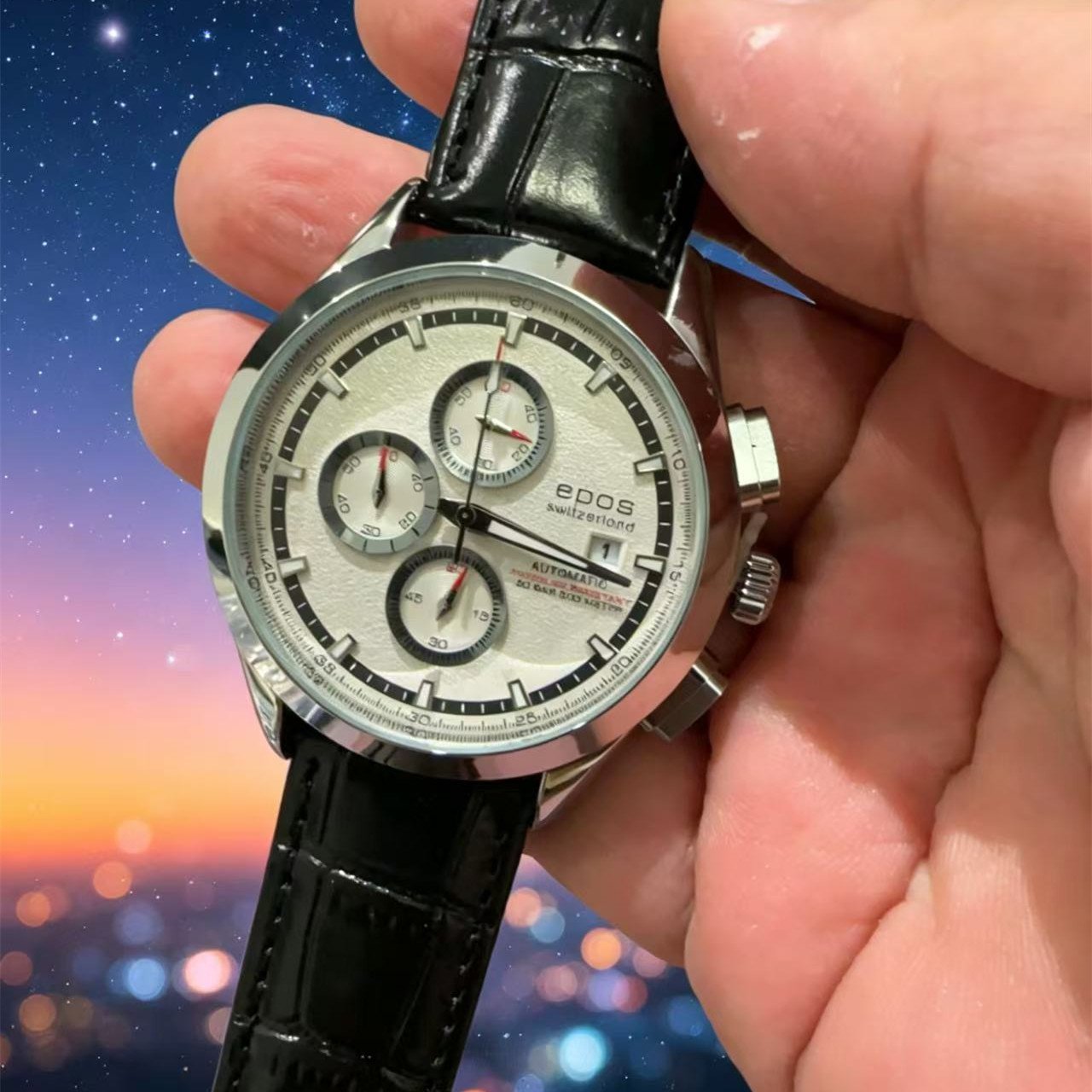
Leather is the classic choice and the most versatile option for smart and formal outfits. It softens and moulds to your wrist over time.
- Calfskin: smooth, affordable and comfortable.
- Alligator and crocodile-style: luxurious textured patterns for formal watches.
- Suede: soft and casual with a matte finish.
- Vintage or distressed leather: rugged and characterful, ideal for pilot and field watches.
Best for: dress watches, office wear and evenings. Avoid: water, heavy sweat and hot climates.
2. Metal bracelet
Stainless steel bracelets are durable, water resistant and suit almost any setting. Popular designs include three-link, five-link, jubilee-style and integrated bracelets.
Best for: everyday wear, sports watches, travel and swimming. Consider: weight and the type of clasp.
3. Rubber watch strap
Modern rubber straps are made of vulcanised rubber or high-grade FKM fluoroelastomer. They are waterproof, comfortable and resistant to sweat and heat.
Best for: diving, swimming, gym, hot weather and sports watches.
4. Silicone strap
Silicone is softer and cheaper than rubber. It is comfortable but can attract lint and dust.
Best for: casual and sports wear, fitness and smartwatches.
5. NATO strap
The NATO strap is a single piece of nylon that passes under the watch and through two loops. It has military origins and an extra keeper that stops the watch falling off if a spring bar breaks.
Best for: casual style, travel and adding a pop of colour. Very affordable and easy to swap.
6. Zulu strap
Similar to a NATO but made with thicker nylon and heavier round hardware. It feels more robust and suits large tool watches.
Best for: dive and field watches, rugged outdoor wear.
7. Canvas strap
Canvas straps are made from woven cotton or synthetic fabric. They look relaxed, outdoorsy and vintage.
Best for: field watches, weekends and summer outfits.
8. Mesh (Milanese) bracelet
A Milanese or mesh bracelet is a finely woven metal band. It looks elegant, breathes well and adjusts easily with a sliding clasp.
Best for: dress watches, minimalist styles and women’s watches.
9. Sailcloth strap
Sailcloth straps use material inspired by yacht sails. They are water resistant, durable and stylish.
Best for: sports and dive watches, summer and sailing looks.
10. Quick-release and integrated straps
Quick-release straps have small levers on the spring bars, so you can change them without tools. Integrated straps are designed for a specific case shape and usually only fit that model.
Best for: collectors who change straps often.
Watch Strap Comparison Table
| Strap type | Water friendly | Formality | Comfort | Durability |
|---|---|---|---|---|
| Leather | No | High | High | Medium |
| Metal bracelet | Yes | Medium–High | Medium | Very high |
| Rubber | Yes | Low–Medium | High | High |
| Silicone | Yes | Low | High | Medium |
| NATO / Zulu | Yes (dries fast) | Low | High | High |
| Canvas | Limited | Low | Medium | Medium |
| Mesh | Yes | High | High | High |
| Sailcloth | Yes | Medium | High | High |
How to Measure Lug Width
Lug width is the most important measurement when buying a new watch strap. It is the distance between the inside edges of the lugs, where the strap attaches.
- Take a ruler or calipers with millimetre markings.
- Measure the gap between the two lugs on one end of the watch.
- Round to the nearest whole millimetre.
Common lug widths are 18mm, 20mm and 22mm. Many watches list lug width in their specifications. If the strap is too narrow, it will look odd and leave gaps; if it is too wide, it will not fit.
Strap Length and Taper
Straps come in different lengths to fit different wrists:
| Wrist size | Recommended strap length |
|---|---|
| Small (under 6.5 in) | Short |
| Medium (6.5–7.5 in) | Regular |
| Large (over 7.5 in) | Long |
Taper is how much the strap narrows from the lugs to the buckle. A 20mm strap might taper to 16mm. More taper looks more elegant and wears comfortably on smaller wrists, while less taper looks sportier and bolder. Our watch size guide explains how proportion affects the overall look.
Types of Watch Clasp and Buckle
The fastening system affects both comfort and security:
- Tang buckle (pin buckle): classic and simple, like a belt buckle.
- Deployant clasp: folds open and closed, reducing wear on leather straps.
- Butterfly clasp: opens symmetrically and hides beneath the bracelet for a seamless look.
- Fold-over clasp with safety: common on steel bracelets; a second latch prevents accidental opening.
- Dive extension: extends the bracelet to fit over a wetsuit.
- Micro-adjustment: lets you fine-tune bracelet length by a few millimetres, ideal for hot days.
How to Change a Watch Strap in 5 Steps
Changing a watch strap is easy once you know how. You need a spring bar tool, which is inexpensive and widely available.
- Protect the watch: place it face down on a soft cloth. Cover the lugs with tape if you are worried about scratches.
- Release the spring bar: insert the forked end of the tool between the strap and the lug, and gently compress the spring bar to free it.
- Remove the old strap: repeat on the other end of the spring bar and lift the strap away.
- Fit the new strap: insert the spring bar into the new strap, place one end into the lug hole, compress the other end and slide it into place.
- Check it is secure: tug the strap gently to make sure both spring bars have clicked into their holes.
Quick-release straps skip most of these steps: just pull the small lever and swap.
A Brief History of the Watch Strap
The very first wristwatches of the early 1900s were often pocket watches soldered onto wire lugs and worn on simple leather cuffs. Soldiers in the First World War needed a secure, practical way to wear a watch, and the leather strap quickly became standard equipment.
Metal bracelets grew popular in the 1930s and 1940s, when expandable and riveted designs appeared. In the 1950s and 1960s, sports and dive watches arrived on steel bracelets and tropic rubber straps, which suited the water far better than leather.
The famous NATO strap traces its roots to a British Ministry of Defence specification from the early 1970s. Soldiers received a simple nylon strap that was easy to replace, and the name “NATO” came from the stock number used to order it. Decades later, the style became a fashion staple thanks to its colourful stripes and film appearances.
Today, quick-release spring bars and modular designs make changing a watch strap easier than ever, and many brands now design straps as part of a complete wardrobe for one watch.
The Best Watch Strap for Each Type of Watch
| Watch type | Classic pairing | Alternative pairing |
|---|---|---|
| Dress watch | Black or brown leather | Fine mesh bracelet |
| Dive watch | Steel bracelet or rubber | NATO, sailcloth |
| Pilot watch | Riveted vintage leather | Canvas, Zulu |
| Field watch | Canvas or NATO | Distressed leather |
| Chronograph | Steel bracelet or perforated rally leather | Rubber |
| GMT watch | Steel bracelet | Leather or rubber |
| Integrated sports watch | Integrated bracelet | Integrated rubber |
Learn more about each style in our guide to the types of watches, or see how a two-time-zone watch works in our GMT watch guide.
Building a Watch Strap Wardrobe
You do not need dozens of straps to transform one watch. A simple wardrobe of four covers almost every occasion:
- The original bracelet for everyday versatility.
- A dark brown leather watch strap for smart and formal settings.
- A rubber strap for sport, swimming and hot weather.
- A colourful NATO or canvas strap for weekends and holidays.
With these four options and a spring bar tool, a single watch can feel like four different watches.
Sustainable and Vegan Strap Options
More people now ask for straps that are kinder to animals and the planet. Popular options include straps made from recycled ocean plastic, plant-based leather alternatives made from apple, grape or cactus fibres, cork straps and recycled nylon NATO straps. They look stylish, wear comfortably and are increasingly durable.
How to Adjust a Metal Bracelet
Most metal bracelets are sized by removing links. Some links are held by push pins, which you push out with a small tool following the arrow printed on the inside of the link. Others use screws, which need a precision screwdriver. Always remove links evenly from both sides of the clasp so the watch stays centred on your wrist. If you are not confident, a jeweller or watchmaker can size it in minutes.
How to Match a Watch Strap to Your Outfit
- Formal and business: black or dark brown leather, or a fine mesh bracelet.
- Smart casual: brown leather, suede or a steel bracelet.
- Casual weekends: NATO, canvas or distressed leather.
- Sports and gym: rubber or silicone.
- Beach and holidays: rubber, sailcloth or NATO.
- Evenings out: polished steel or a refined leather strap.
As a general rule, match leather straps to your shoes and belt. For more styling tips, read our guide on how to wear a watch.
Matching Strap Colour to Your Dial
Colour can make a watch look completely new:
- Black dial: black leather, grey NATO, steel bracelet or red accents for a sporty look.
- White or silver dial: brown leather, navy, black or tan straps.
- Blue dial: tan or brown leather, navy rubber or grey fabric.
- Green dial: brown leather, olive canvas or black rubber.
- Gold or rose-gold case: brown, burgundy or black leather.
How to Care for Each Type of Watch Strap
Leather
Keep leather away from water, sweat and perfume. Let it air out after wearing, rotate straps to extend their life and apply leather conditioner occasionally.
Metal bracelets
Clean regularly with warm soapy water and a soft brush if the watch is water resistant. Dirt between the links causes wear over time.
Rubber and silicone
Rinse with fresh water after swimming or exercise and dry with a towel.
Fabric, NATO and canvas
Remove from the watch and hand-wash in mild soapy water, then dry flat.
For complete maintenance advice, see our watch care guide.
Common Watch Strap Mistakes
- Buying the wrong width: always measure lug width instead of guessing.
- Wearing leather in water: it shortens the life of the strap dramatically.
- Over-tightening: a strap that is too tight is uncomfortable and stresses the spring bars.
- Ignoring spring bars: worn or bent spring bars can fail, so replace them when you change straps.
- Mismatching formality: a bright rubber strap on a gold dress watch rarely works.
- Forgetting the buckle colour: match a steel buckle to a steel case and a gold buckle to a gold case for a polished finish.
How Often Should You Replace a Watch Strap?
- Leather: every 1–3 years depending on wear, sweat and climate.
- Rubber: every 3–5 years, or sooner if it cracks.
- Fabric and NATO: whenever it frays or fades.
- Metal bracelet: can last decades, but check pins and clasps during servicing.
Signs it is time for a new watch strap include cracks, a strong odour, stretched holes, fraying and loose stitching.
Frequently Asked Questions
How do I know what size watch strap to buy?
Measure the lug width, which is the distance between the inside edges of the lugs, in millimetres. Common sizes are 18mm, 20mm and 22mm. Then choose a strap length that matches your wrist size.
What is the most comfortable watch strap?
Many people find rubber, NATO and soft leather straps the most comfortable. The best choice depends on your activity and climate.
Can I wear a leather watch strap while swimming?
No. Water damages leather, causing it to crack, smell and lose its shape. Use rubber, silicone, steel or NATO straps for water.
What is a NATO strap?
A NATO strap is a single piece of nylon that passes beneath the watch and through two loops. It is secure, affordable, easy to change and comes in many colours.
Can I change my watch strap myself?
Yes. With a simple spring bar tool you can change most straps in a few minutes. Quick-release straps can be changed without any tools.
Which watch strap is best for everyday wear?
A stainless steel bracelet is the most versatile everyday option because it is durable, water friendly and suitable for both casual and smart outfits.
How often should I replace a leather watch strap?
Most leather straps last one to three years depending on how often you wear them, your climate and how much you sweat. Replace the strap when it cracks, smells, stretches or the stitching loosens.
Are quick-release straps secure?
Yes. Good quality quick-release spring bars are just as secure as standard ones. Check that both levers have clicked fully into the lug holes after fitting.
Conclusion
A watch strap may look like a small detail, but it shapes your whole experience of wearing a watch, from comfort to style.
The right watch strap transforms how your watch looks, feels and performs. Leather adds elegance, steel offers versatility, rubber handles water and sport, and NATO and canvas straps bring relaxed style. Measure your lug width, think about how you will wear your watch and build a small collection of straps to match every occasion. It is one of the most affordable and enjoyable ways to fall in love with your watch all over again.
Explore watches on leather, steel and rubber in our men’s watches and women’s watches collections, and read our types of watches guide to find the perfect pairing.