
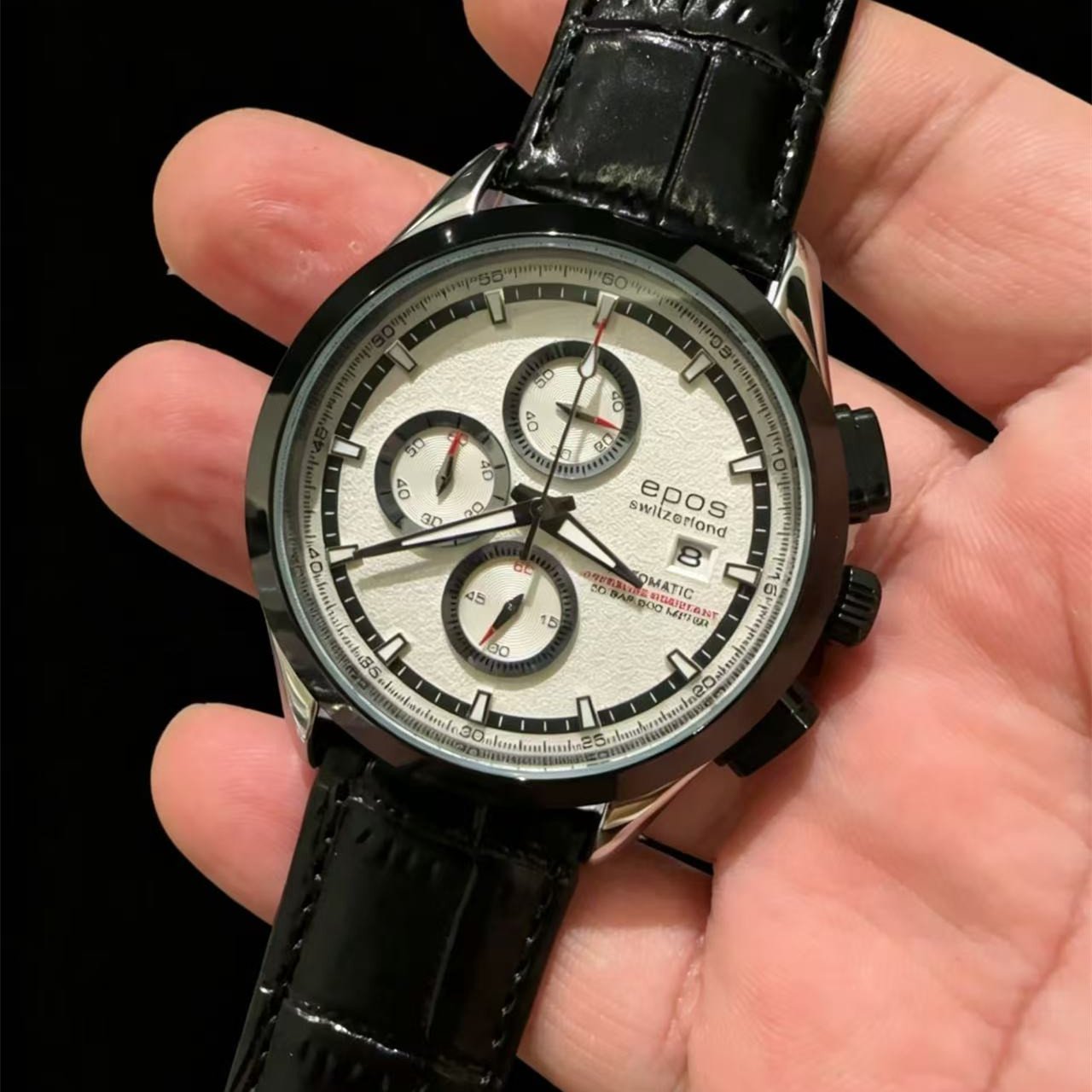
Watch Size Guide: How to Choose the Perfect Fit for Your Wrist (2026)
Getting the right watch size is the difference between a timepiece that looks tailored and one that looks borrowed. A watch that is too large slides around, catches on cuffs and overwhelms a slim wrist. A watch that is too small can look lost on a broad wrist. The good news is that finding your ideal fit takes only a tape measure and a few minutes.
Quick answer: Measure your wrist just above the wrist bone. For men, wrists under 6.5 inches (16.5 cm) suit 36–39mm cases, 6.5–7.5 inches (16.5–19 cm) suit 39–42mm, and over 7.5 inches suit 42–46mm. For women, 26–34mm suits most wrists, while 34–38mm gives a bolder look. Always check that the lug-to-lug length is shorter than the flat top of your wrist.

Key Takeaways
- Measure your wrist just above the wrist bone before choosing a watch size.
- Most men suit 38–42mm and most women 26–36mm.
- Lug-to-lug length should never exceed the flat top of your wrist.
- Thickness under 12mm slides easily under a shirt cuff.
- Dial colour and bezel width change how big a watch size looks.
Why Watch Size Matters More Than You Think
Watch size affects three things: how the watch looks, how it feels and how practical it is. Proportion is everything in style. A watch that matches the width of your wrist looks intentional, just like a jacket that fits your shoulders.
Comfort matters too. An oversized case with long lugs sits on the edges of your wrist, digs in and tilts when you move. A well-sized case sits flat and stays put. Finally, practicality: a slim watch slides under a shirt cuff, while a thick sports watch may not.
Trends also play a role. Between roughly 2005 and 2018, very large watches of 44mm and above were fashionable. In 2026 the industry has swung back toward smaller, slimmer designs, with 36–41mm now considered the sweet spot for most men.
Step 1: Measure Your Wrist Correctly
You can measure your wrist in two easy ways.
Method 1: Flexible tape measure
- Wrap a soft tape measure around your wrist, just above the wrist bone where you wear a watch.
- Keep it snug but not tight.
- Read the measurement in inches or centimetres.
Method 2: Paper strip and ruler
- Cut a thin strip of paper about 25 cm long.
- Wrap it around your wrist and mark where it overlaps.
- Lay it flat and measure the distance to the mark with a ruler.
Measure your non-dominant wrist, because that is where most people wear a watch. Write down both the circumference and the flat width across the top of your wrist; the second number is useful for checking lug-to-lug length.
Step 2: Use the Watch Size Chart
Once you know your wrist circumference, use this watch size chart as a starting point.
Men’s watch size chart
| Wrist circumference | Wrist type | Recommended case diameter |
|---|---|---|
| Under 6 in (15.2 cm) | Small | 34–38mm |
| 6–6.5 in (15.2–16.5 cm) | Small to medium | 36–39mm |
| 6.5–7 in (16.5–17.8 cm) | Medium | 38–41mm |
| 7–7.5 in (17.8–19 cm) | Medium to large | 40–42mm |
| 7.5–8 in (19–20.3 cm) | Large | 42–44mm |
| Over 8 in (20.3 cm) | Extra large | 44–46mm |
Women’s watch size chart
| Wrist circumference | Delicate look | Classic look | Bold look |
|---|---|---|---|
| Under 5.5 in (14 cm) | 22–26mm | 26–30mm | 30–34mm |
| 5.5–6.5 in (14–16.5 cm) | 24–28mm | 28–34mm | 34–38mm |
| Over 6.5 in (16.5 cm) | 26–30mm | 32–36mm | 36–40mm |
These are guidelines, not rules. Many women love the bold look of a 38–40mm “boyfriend” watch, and many men with large wrists prefer a vintage-style 38mm. Read our guide to watches for women for more styling ideas.
Step 3: Understand Case Diameter
Case diameter is the width of the watch case measured from one side to the other, excluding the crown. It is the number you see on most product pages, such as “40mm.”
Keep in mind that two watches of the same diameter can wear very differently. A watch with a thin bezel and a large dial looks bigger than one with a thick bezel and a small dial. Dial colour matters too: white and silver dials look larger than black or navy ones.
Step 4: Check Lug-to-Lug Length (The Hidden Number)
Many experienced collectors say lug-to-lug length matters more than diameter. Lug-to-lug is the distance from the tip of the top lugs to the tip of the bottom lugs. It tells you how much of your wrist the watch actually covers from top to bottom.
The rule is simple: the lug-to-lug length should be equal to or shorter than the flat top of your wrist. If the lugs hang over the edges, the watch will look too large and feel uncomfortable, no matter what the diameter says.
| Wrist circumference | Comfortable lug-to-lug |
|---|---|
| 6–6.5 in | 42–46mm |
| 6.5–7 in | 45–48mm |
| 7–7.5 in | 47–50mm |
| Over 7.5 in | 49–53mm |
Step 5: Do Not Forget Case Thickness
Thickness, or case height, controls how a watch sits on your wrist and whether it fits under a cuff. Here is a simple guide:
- Under 9mm: ultra-slim, ideal for dress watches and formal wear.
- 9–12mm: the everyday comfort zone for most watches.
- 12–15mm: sporty and substantial, typical for chronographs and divers.
- Over 15mm: very chunky, best for large wrists and casual wear.
Mechanical chronographs are usually thicker because of their extra modules. Learn why in our chronograph watch guide. Quartz watches are often the thinnest, as explained in our automatic vs quartz watch comparison.
Step 6: Consider Lug Width and Strap Taper
Lug width is the space between the lugs where the strap attaches. Common widths are 18mm, 20mm and 22mm. A general rule is that lug width should be roughly half the case diameter. A 40mm watch with a 20mm lug width looks balanced.
Strap taper is how much the strap narrows toward the buckle. A strap that tapers from 20mm to 16mm looks more elegant and wears more comfortably on smaller wrists. Our watch strap guide explains how to choose the right fit.
Step 7: Match the Watch Size to the Style
Different types of watches traditionally come in different sizes. This helps you set expectations:
| Watch style | Typical men’s size | Typical women’s size |
|---|---|---|
| Dress watch | 36–40mm | 26–32mm |
| Dive watch | 40–44mm | 34–38mm |
| Pilot watch | 40–46mm | 36–38mm |
| Chronograph | 40–44mm | 34–38mm |
| Field watch | 36–40mm | 32–36mm |
| Square or tank | 25–35mm width | 20–28mm width |
Square and rectangular watches wear larger than round ones of the same measurement, because the corners cover more of the wrist. Always size down for shaped cases. See the full list of styles in our guide to types of watches.
How Dial and Bezel Design Change the Perceived Watch Size
Two watches with exactly the same 40mm case can look like completely different sizes on the wrist. The reason is visual weight. Designers control how large a watch appears through the dial opening, the bezel and the colours they use.
Dial opening
The dial opening is the visible area inside the bezel. A thin, polished bezel exposes more dial, so the watch looks larger. A thick, rotating dive bezel shrinks the visible dial, so the same case looks smaller and more compact.
Dial colour
Light colours such as white, silver, cream and champagne reflect light and make a dial look bigger. Dark colours such as black, navy and deep green look smaller and more discreet. If you are between two sizes, a dark dial in the larger size or a light dial in the smaller size is often the perfect compromise.
Indices and numerals
Large Arabic numerals and wide hands make a watch look bold. Slim baton indices and fine hands make it look refined and smaller. Minimal dials with lots of empty space look larger than busy chronograph dials.
Case finishing
Fully polished cases catch the light and draw attention, which can exaggerate size. Brushed cases look more understated. Many modern sports watches mix both finishes to control how big they feel.
Watch Size and Weight: Why Grams Matter
Size and weight go together, but material changes the equation completely. A 42mm titanium watch can weigh less than a 38mm solid gold piece. Heavy watches feel more substantial, but they also slide around more and can become tiring by the end of the day.
| Case material | Typical weight (40mm on bracelet) | How it feels |
|---|---|---|
| Titanium | 80–100 g | Light and comfortable |
| Stainless steel | 140–170 g | Solid and balanced |
| Ceramic | 90–120 g | Light, warm to the touch |
| Gold | 180–250 g | Heavy and luxurious |
If you have a small wrist but love larger designs, a lightweight material such as titanium or ceramic can make a slightly bigger watch size feel natural and comfortable.
Does Your Height or Body Type Matter?
Your wrist measurement is the most reliable guide, but overall proportions play a small role too. Taller people with long forearms can often carry a slightly larger case, while petite people may prefer to size down even with the same wrist circumference. Hand size matters as well; large hands make small watches look even smaller.
Clothing style is the final factor. If you mostly wear tailored suits and fitted shirts, choose a slimmer, more modest case. If you live in T-shirts, denim and outdoor gear, a larger sports watch will feel right at home.
Watch Size for Gifts: When You Cannot Measure
Buying a watch as a surprise gift? You can still choose the right size:
- Borrow a bracelet or watch they already wear and measure it.
- Choose the middle of the range: 39–40mm for men and 32–34mm for women fits most people.
- Pick a leather or fabric strap, which adjusts to more wrist sizes than a bracelet.
- Keep the receipt and check the seller’s exchange policy.
Our full list of watch gift ideas has more tips for choosing a watch someone will love.
How Watch Size Should Feel When You Wear It
Measurements are useful, but the final test is how the watch feels on your wrist. A well-fitted watch should:
- Sit flat on top of the wrist without the lugs overhanging.
- Move only slightly when you shake your arm.
- Leave room for one finger to slide under the strap.
- Not dig into the back of your hand when you bend your wrist.
- Be easy to read at a glance.
Most people wear their watch just above the wrist bone. Wear it slightly looser in hot weather, because wrists swell with heat and activity.
How to Adjust Bracelet and Strap Fit
Even a perfect watch size can feel wrong if the bracelet or strap is poorly adjusted.
Steel bracelets
Bracelets are adjusted by removing links. Remove the same number of links on both sides of the clasp so the watch stays centred. Many clasps also have micro-adjustment holes that let you fine-tune the fit by a few millimetres, which is great for hot days.
Leather and fabric straps
Choose the hole that leaves room for one finger. If you are between holes, a watchmaker can add an extra hole, or you can pick a strap with a different length. Most standard straps fit wrists between 6 and 8 inches.
Watch Size Tips for Small Wrists
If your wrist is under 6.5 inches, these tips help any watch look proportional:
- Choose cases between 34mm and 39mm.
- Look for short, curved lugs.
- Pick thinner cases under 11mm.
- Lighter dials can make a small watch look slightly larger without overpowering you.
- Leather or tapered straps look more balanced than chunky bracelets.
Watch Size Tips for Large Wrists
If your wrist is over 7.5 inches, you can carry more presence:
- Cases between 42mm and 46mm look balanced.
- Wider lug widths of 22mm or 24mm match your wrist.
- Thicker straps and bracelets avoid the “thin band” look.
- Bold dials, chronographs and divers suit your proportions.
Common Watch Size Mistakes
- Choosing by diameter alone: always check lug-to-lug and thickness.
- Following old trends: very large watches look dated in 2026.
- Ignoring dial design: bezels and dial colours change how big a watch looks.
- Wearing it too loose: a sliding watch looks sloppy and scratches more easily.
- Not checking clothing: thick watches can clash with fitted shirt cuffs.
How to Size a Watch When Shopping Online
Buying online is convenient, but you cannot try the watch on. Use these tricks:
- Print a paper template of the case diameter and lug-to-lug and wrap it around your wrist.
- Compare the new watch to one you already own and like.
- Look at photos of the watch on a wrist, not only flat product shots.
- Read the full specifications, including thickness and lug width.
- Check the seller’s return policy before you buy.
At Luxury Watch Markets, every product page lists the key details, and our team can help you choose. Just contact us with your wrist measurement.
Frequently Asked Questions
What is the most popular watch size for men?
In 2026 the most popular men’s watch size is between 38mm and 41mm. It suits average wrists of 6.5 to 7.5 inches and works for both formal and casual outfits.
What watch size should a woman wear?
Most women look great in cases from 26mm to 34mm for a classic look, while 34mm to 38mm gives a modern, bolder style. Measure your wrist and choose based on the look you prefer.
Is a 42mm watch too big?
A 42mm watch is not too big for wrists of about 7 inches or larger. On wrists under 6.5 inches it can look oversized, especially if the lug-to-lug length is over 50mm.
How do I measure my wrist for a watch?
Wrap a soft tape measure or paper strip around your wrist just above the wrist bone, keep it snug and read the length. Measure the wrist you usually wear your watch on.
What is lug-to-lug and why does it matter?
Lug-to-lug is the distance between the tips of the top and bottom lugs. If it is longer than the flat top of your wrist, the watch will overhang and look too big, even if the diameter seems right.
Should a watch be tight or loose?
A watch should be snug but comfortable, with room for one finger under the strap. It should move slightly but not slide over your wrist bone.
Final Thoughts on Choosing Your Watch Size
There is no universal perfect watch size, only the size that is perfect for you. Your wrist, your wardrobe and your personal taste all play a part, and it is completely fine to break the rules if a watch makes you happy. Many collectors own watches across several sizes and enjoy how each one feels different.
The perfect watch size balances your wrist measurement, the watch style and your personal taste. Measure your wrist, use the charts above, check lug-to-lug and thickness, and then trust how the watch feels. A well-fitted watch looks better, feels better and gets worn more often.
Now that you know your ideal fit, explore our men’s watches, women’s watches and new arrivals. For more buying advice, read our full luxury watch buying guide.