
How to Wear a Watch: 21 Style Rules for Every Outfit and Occasion
Owning a beautiful watch is only half the story. Knowing how to wear a watch well, with the right fit, on the right wrist and with the right outfit, is what makes it look effortless. The good news is that the rules are simple, logical and easy to remember. Once you know them, you will feel confident wearing your watch anywhere, from a job interview to a wedding to a weekend away.
Quick answer: Most people wear a watch on their non-dominant wrist, just above the wrist bone, snug enough that it does not slide over the hand but loose enough to fit one finger underneath. Match the formality of the watch to the outfit: slim dress watches with suits, sports watches with casual clothes. Match leather straps to your shoes and belt, and match metal tones to your jewellery.

Key Takeaways
- Most people wear a watch on the non-dominant wrist, just above the wrist bone.
- A good fit leaves room for one finger under the strap.
- Match the formality of the watch to the formality of the outfit.
- Coordinate leather straps with shoes and belt, and metals with jewellery.
- The most important rule is to wear a watch you love.
Rule 1: Choose the Right Wrist
Traditionally, people wear a watch on the non-dominant wrist. If you are right-handed, that means the left wrist. There are good reasons for this:
- It keeps the watch safe from knocks while you use your dominant hand.
- It lets you check the time while writing or holding something.
- Most crowns sit at 3 o’clock, which is easy to reach with the opposite hand on the left wrist.
Left-handed people often wear a watch on the right wrist, and some brands make “destro” or left-handed watches with the crown on the left side. Ultimately, there is no strict rule. Wear it wherever it feels most comfortable.
Rule 2: Position It Correctly
The ideal position is just above the wrist bone (the ulna), on the side toward your elbow. In this position, the watch does not knock against the bone when you move your hand and it stays visible when you check the time.
Some people prefer to wear their watch slightly lower, resting on the wrist bone, for a relaxed look. Others push it slightly higher so it stays hidden under a shirt cuff. Both are fine as long as it is comfortable.
Rule 3: Get the Fit Right
A watch that is too loose slides around, spins on your wrist and can scratch against desks. A watch that is too tight leaves marks and feels uncomfortable.
The perfect fit:
- Allows one finger to slide between the strap and your wrist.
- Does not slide over your wrist bone onto your hand.
- Stays mostly in place when you move your arm.
Wrists swell during the day, in hot weather and after exercise, so a bracelet with micro-adjustment is very helpful. Our watch size guide explains how case size and lug-to-lug length also affect fit.
Rule 4: Should the Watch Face Inward or Outward?
Most people wear a watch with the dial on the outside of the wrist. Some prefer the dial facing inward, a style historically used by soldiers and pilots to protect the crystal and make the time easier to read while holding a rifle or controls. It also reduces reflections that could give away a position.
Today it is a personal style choice. Facing outward is more common and shows off the watch, while facing inward can protect it from scratches.
Rule 5: Match the Watch to the Dress Code
The golden rule of how to wear a watch is to match its formality to your outfit. The more formal the clothes, the simpler, slimmer and more discreet the watch should be.
| Dress code | Best watch choice | Best strap |
|---|---|---|
| Black tie | Thin gold or steel dress watch, white or black dial | Black leather |
| Business formal | Slim dress watch or simple steel watch | Black or dark brown leather, steel |
| Business casual | Steel sports watch, chronograph or dress watch | Brown leather, steel bracelet |
| Smart casual | Chronograph, pilot, GMT or dive watch | Leather, suede, steel |
| Casual | Dive, field or sports watch | NATO, canvas, rubber, steel |
| Active/sport | Sports, dive or digital watch | Rubber, silicone |
Rule 6: How to Wear a Watch With a Suit
A suit calls for a watch that complements rather than competes:
- Choose a thin case under 11mm so it slips under the shirt cuff.
- Keep the dial simple: white, silver, black or navy work best.
- Pick leather that matches your shoes and belt.
- Avoid oversized divers, bright rubber straps and chunky smartwatches.
- Your shirt cuff should cover the watch when your arm is at your side and reveal it when you bend your arm.
Rule 7: How to Wear a Watch With Black Tie
Black tie is one of the most formal dress codes. Traditional etiquette suggested not wearing a watch at all, because checking the time implied you were in a hurry to leave. Today, a slim, elegant dress watch on a black leather strap is perfectly acceptable. Gold or platinum cases with simple dials are the most classic choice.
Rule 8: How to Wear a Watch With Smart Casual Clothes
Smart casual gives you the most freedom. A steel chronograph, a pilot watch, a GMT or a dive watch on a bracelet all work beautifully with chinos, a blazer and loafers. Suede or textured leather straps add warmth. Explore our chronograph watch guide for one of the most versatile smart-casual choices.
Rule 9: How to Wear a Watch With Casual Outfits
With jeans, T-shirts and sneakers, you can have fun. Sports watches, field watches and dive watches look great. Try a colourful NATO or canvas strap to add personality. Larger cases also suit casual wear well.
Rule 10: Match Leather to Leather
When wearing a leather strap, try to match it to your other leather accessories, especially your shoes and belt. Black strap with black shoes, brown strap with brown shoes. The shades do not need to match exactly, but they should be in the same family.
Rule 11: Match Metals to Metals
Coordinate the metal of your watch case with your other metal accessories, such as cufflinks, rings, belt buckles and glasses frames:
- Steel or white gold watch with silver-toned accessories.
- Yellow gold watch with gold accessories.
- Rose gold watch with rose gold or warm-toned accessories.
- Two-tone watches give you flexibility to mix both.
Rule 12: How to Wear a Watch With Bracelets
Stacking a watch with bracelets is stylish when done thoughtfully:
- Wear bracelets on the opposite wrist for a clean look, or on the same wrist for a layered style.
- If stacking on the same wrist, place bracelets above the watch, closer to the elbow.
- Avoid hard metal or beaded bracelets rubbing directly against the watch case, which can scratch it.
- Keep the stack balanced: two or three pieces are usually enough.
Women have even more freedom to layer; see our guide to watches for women for stacking ideas.
Rule 13: Match the Watch to the Occasion
| Occasion | Recommended watch |
|---|---|
| Job interview | Simple steel or dress watch on leather or bracelet |
| Wedding (guest) | Dress watch or elegant steel watch |
| Your own wedding | A special dress watch or meaningful gift watch |
| Office | Steel sports watch or dress watch |
| Date night | Elegant chronograph, dress watch or rose-gold piece |
| Beach holiday | Dive watch on rubber or steel |
| Gym | Rubber-strapped sports watch or digital watch |
| Business travel | GMT watch |
Frequent flyers should read our GMT watch guide to see why it is the ultimate travel companion.
Rule 14: Consider Your Wrist Size
A watch should look proportional to your wrist. Small wrists suit 34–39mm cases, average wrists suit 38–42mm and large wrists suit 42–46mm. Proportion makes a bigger style difference than almost anything else.
Rule 15: Coordinate Dial Colour With Your Wardrobe
- Black and white dials: go with everything.
- Blue dials: pair beautifully with navy suits, denim and grey.
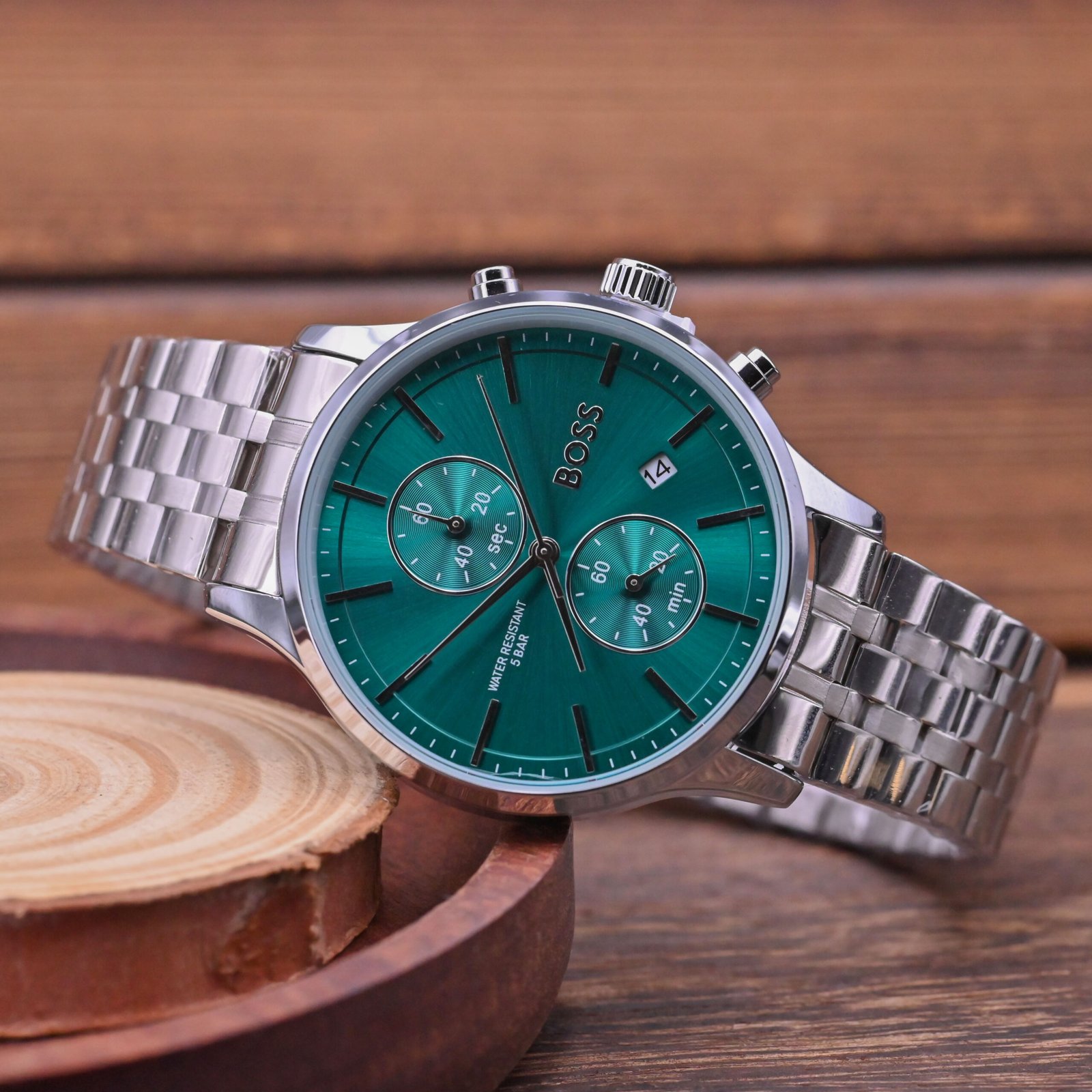
- Green dials: complement earthy tones, olive, tan and brown.
- Champagne and gold dials: suit warm colours and evening wear.
- Bold colours: red, orange or yellow add energy to casual outfits.
Rule 16: Switch Straps to Change the Look
One watch can suit many outfits if you change the strap. A diver on a steel bracelet works in the office, on rubber at the beach and on a NATO at the weekend. Our watch strap guide shows you every option.
Rule 17: Smartwatch Etiquette
Smartwatches are practical, but they can look out of place at formal events. Many people wear a smartwatch for workouts and switch to a traditional watch for meetings, dinners and celebrations. Avoid checking notifications constantly during conversations; it can seem rude.
Rule 18: Watch Etiquette in Meetings and Social Situations
- Avoid looking at your watch repeatedly while someone is talking; it suggests impatience.
- Do not fiddle with the crown, bezel or clasp during meetings.
- Avoid loud beeping alarms or chimes in quiet settings.
- Keep your watch clean; a dirty bracelet undermines a sharp look.
Rule 19: Can You Wear Two Watches?
Wearing two watches at once is rare but not unheard of. Some people wear a smartwatch on one wrist and a mechanical watch on the other. It is a bold statement, so only do it if you are confident with the look.
Rule 20: Take It Off When Necessary
Part of knowing how to wear a watch is knowing when not to. Remove it before:
- Heavy physical work, gardening or DIY.
- Contact sports.
- Saunas, steam rooms and hot tubs.
- Applying lotions, sunscreen or perfume.
See our watch care guide for more ways to protect your watch.
Rule 21: Wear What You Love
Style rules are helpful guidelines, not laws. The most important rule is to wear a watch that makes you happy. If you love a bold dive watch with a suit, wear it with confidence. Personal style is about expressing who you are.
How to Wear a Watch in Different Seasons
The season changes what you wear, and it should change how you wear a watch too.
Summer
Heat makes wrists swell and skin sweat, which is hard on leather. Switch to a steel bracelet, rubber strap, sailcloth or NATO. Lighter dials and colourful straps suit summer clothes, and a water-resistant sports watch is perfect for the pool or beach. Wear the watch slightly looser for comfort.
Autumn
Autumn brings jackets, knitwear and earthy colours. This is the perfect season for brown leather, suede and green or brown dials. Pilot and field watches look especially good with layered outfits.
Winter
Heavy coats, thick cuffs and gloves can hide your watch or catch on it. A slimmer case slips under layers more easily. Dark leather straps, gold cases and rich dial colours such as burgundy and navy feel warm and festive. Be careful moving from cold outdoor air to warm interiors, which can cause condensation on older watches.
Spring
Spring is a time to refresh. Try a lighter leather tone, a canvas strap or a pastel dial. It is also a good season to clean your watches thoroughly after the winter months.
How to Wear a Watch for Your Profession
Different working environments call for different approaches:
- Corporate and finance: a slim steel or gold dress watch on leather or a refined bracelet signals reliability and attention to detail.
- Creative industries: you have more freedom. Bold dial colours, unusual case shapes and skeleton watches express creativity.
- Healthcare: a simple, washable watch on a rubber or steel strap, or a watch worn on a lanyard or pinned to clothing, may be more practical due to hygiene rules.
- Hospitality and retail: a durable steel watch that is easy to clean and read.
- Trades and outdoor work: a tough field or digital watch, removed during heavy work.
- Remote work: anything you love, but the habit of wearing a watch can help separate work time from personal time.
How to Wear a Watch When You Wear Glasses or Other Accessories
Your watch is part of a wider set of accessories. If you wear metal glasses frames, a ring or a bracelet, try to keep the metal tones consistent. A gold watch with gold-rimmed glasses looks harmonious, while steel pairs naturally with silver frames. For tortoiseshell or acetate frames, brown leather straps look especially stylish.
Building a Watch Rotation That Covers Every Outfit
If you love watches, a small rotation makes it easy to wear the right piece every day. A practical three-watch rotation includes a steel sports watch, a dress watch on leather and a fun casual piece. Explore every style option in our guide to the types of watches.
How to Wear a Watch: Common Mistakes to Avoid
- Wearing it too loose: it looks careless and slides around.
- Choosing the wrong size: oversized watches overwhelm slim wrists.
- Mismatching formality: a bright rubber strap at a black-tie event.
- Clashing metals: gold watch with silver cufflinks.
- Neglecting maintenance: scratched crystals and dirty bracelets.
- Ignoring the cuff: a watch that is too thick catches on shirt sleeves.
Frequently Asked Questions
Which wrist should you wear a watch on?
Most people wear a watch on their non-dominant wrist, so right-handed people usually wear it on the left. It protects the watch and makes it easier to check the time and adjust the crown.
How tight should a watch be?
A watch should be snug but comfortable, with enough space to slide one finger between the strap and your wrist. It should not slide over your wrist bone.
Where on the wrist should a watch sit?
Wear your watch just above the wrist bone, toward the elbow. This keeps it comfortable and visible without knocking against the bone.
Can you wear a sports watch with a suit?
Yes, as long as it is slim enough to fit under the shirt cuff and has a clean dial. A steel sports watch on a bracelet or leather strap can look sharp with a suit.
Should my watch match my belt and shoes?
If you wear a leather strap, it looks best when it matches your shoes and belt in colour family, such as brown with brown or black with black.
Is it rude to look at your watch?
Repeatedly checking your watch during a conversation can seem impatient. A quick glance is fine, but give people your full attention.
Can women wear a watch on the right wrist?
Absolutely. Anyone can wear a watch on whichever wrist feels most comfortable. The non-dominant wrist is simply the most common and practical choice.
How should I wear a watch with long sleeves?
Choose a slimmer watch that fits under the cuff, and wear it just above the wrist bone. The cuff should cover the watch when your arm hangs naturally and reveal it when you bend your arm.
Conclusion
Watches are one of the few accessories that combine function, craftsmanship and personal meaning. When you wear a watch thoughtfully, it quietly lifts every outfit.
Learning how to wear a watch with confidence is easy. Wear it on your non-dominant wrist, just above the wrist bone, with a snug fit. Match its formality to your outfit, coordinate leather and metals, and choose a size that suits your wrist. Then, most importantly, wear what you love.
Ready to complete your look? Explore our men’s watches, women’s watches and the latest new arrivals, or start with our luxury watch buying guide.